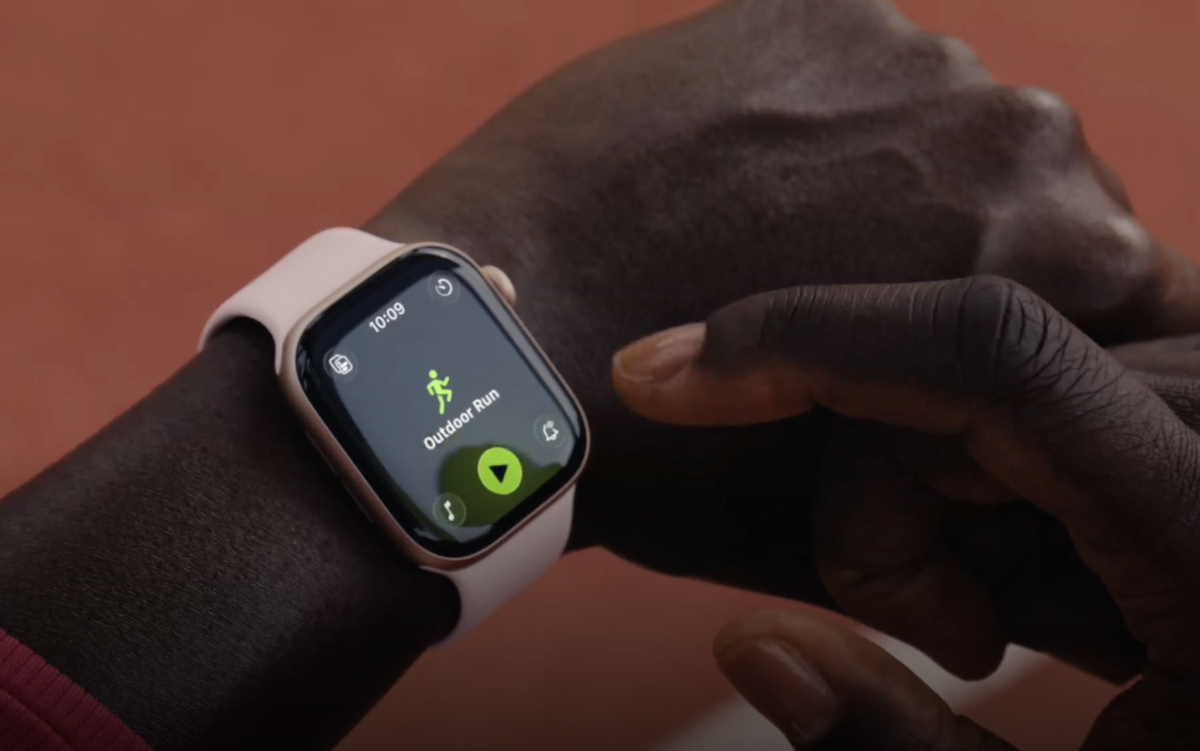
Apple is back in the spotlight after announcing that its latest operating system update, watchOS 27, will no longer support a number of older Apple Watch models.
This system was introduced at the Worldwide Developers Conference (WWDC) and is scheduled to launch in the fall of 2026.
However, this news immediately sparked discussion because several popular devices such as the first generation Apple Watch Ultra (2022) were confirmed to no longer receive major updates.
Although they can still be used as usual, incompatible devices will only get security updates without any new features.
This policy made many users question the reasons behind Apple’s decision, especially because some of the affected models were still quite new and expensive when they were first released.
Reasons Apple Ended Support: Performance Focus and New AI Features
Apple explained that this decision was not without technical considerations. According to Cait Dooley, Apple’s Watch and Health Product Marketing Manager, every system update is always designed to provide the best experience for users. This includes improving performance, power efficiency, and supporting artificial intelligence-based features.
watchOS 27 is said to bring a number of new features that are quite computationally heavy, including improvements to Siri AI and a new gesture feature that allows more intuitive control with just hand movements. These features, according to Apple, require more modern hardware to run optimally.
Therefore, only devices with the latest chipsets such as Apple Watch Series 9 and above, Apple Watch Ultra 2 or later, and Apple Watch SE 3 will get the full watchOS 27 update.
Apple also emphasized that older devices can still be used with the latest iPhones and continue to receive security patches. This means that even without new features, the watch does not immediately become obsolete from a system security perspective.
Older Apple Watches Can Still Be Used, But Their Features Are Lagging
The most pronounced impact of this policy is for users of Apple Watch Series 8 and below, including the first generation Apple Watch Ultra. Even though it still functions normally, the device no longer gets the new features that will be coming in watchOS 27.
This means the user experience will start to lag behind, especially in terms of AI integration, the latest health features, and gesture control which is Apple’s main focus in this latest generation of systems.
On the other hand, this step also shows Apple’s increasingly aggressive strategy in pushing AI-based devices. In other words, Apple is starting to clearly differentiate between old devices that are still “just enough” and new devices designed for the era of intelligent computing.
For users, this decision is certainly an important consideration. Those who want to continue enjoying the latest watchOS features will likely need to upgrade to a newer device, especially if they want to get the most out of Apple’s entire ecosystem.
Despite the pros and cons, a pattern like this is actually nothing new in the Apple ecosystem. Every few years, this Cupertino-based company routinely stops supporting old devices in order to maintain performance and feature consistency in its newest line of devices.
PakarPBN
A Private Blog Network (PBN) is a collection of websites that are controlled by a single individual or organization and used primarily to build backlinks to a “money site” in order to influence its ranking in search engines such as Google. The core idea behind a PBN is based on the importance of backlinks in Google’s ranking algorithm. Since Google views backlinks as signals of authority and trust, some website owners attempt to artificially create these signals through a controlled network of sites.
In a typical PBN setup, the owner acquires expired or aged domains that already have existing authority, backlinks, and history. These domains are rebuilt with new content and hosted separately, often using different IP addresses, hosting providers, themes, and ownership details to make them appear unrelated. Within the content published on these sites, links are strategically placed that point to the main website the owner wants to rank higher. By doing this, the owner attempts to pass link equity (also known as “link juice”) from the PBN sites to the target website.
The purpose of a PBN is to give the impression that the target website is naturally earning links from multiple independent sources. If done effectively, this can temporarily improve keyword rankings, increase organic visibility, and drive more traffic from search results.